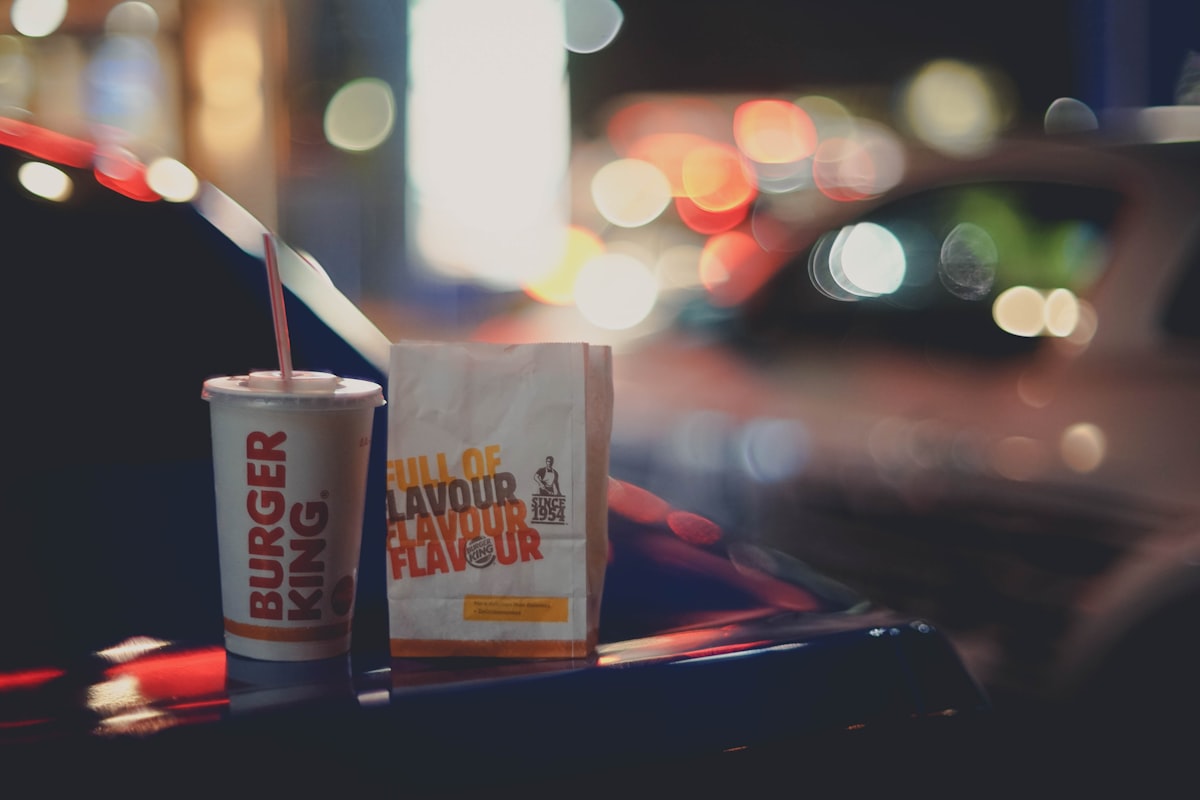
Burger King is No. 2 again — Wendy's lost 12.5% of its customers in a quarter and closed 289 stores
Ever notice that when a burger chain says it's "improving the value proposition," what it means is that you noticed the price? Wendy's noticed you noticing. Its U.S. same-store sales fell 7% in the second quarter, the sixth straight decline, and the company closed 289 restaurants in the first half of the year on the way to roughly 300 for 2026.
Burger King, meanwhile, posted U.S. same-store sales up 8.5% and, for the first time since 2020, is back as the country's No. 2 burger chain by sales. McDonald's, at nearly half the market, is a different sport. This is the fight for second place, and it just flipped.
The number that explains everything: -12.5% and +5.6%
Read Wendy's quarter like a menu board. Traffic — the number of people walking in or pulling through — dropped 12.5%. Average check rose 5.6%. Net result: sales down 7%. In plain English, one in eight customers left, and the ones who stayed paid more.
That is exactly what happens when a chain leans on price to cover for traffic. It works for a quarter. It works for two. By the sixth, the people who were paying $12 for a Baconator combo have done the math and gone to a place that either charges $8 or tastes like $12. Wendy's, at this moment, is neither.
New CEO Bob Wright — a Wendy's veteran who came back in May after two years of executive musical chairs — said it out loud: "Today we are clearly not performing at our potential," and "Our traffic, our value proposition and franchisee economics are not meeting our expectations." He's also said the chain sacrificed quality to cut costs. That's an unusual thing for a CEO to admit, and it's the most honest sentence in the whole quarter.
What Burger King did that worked
BK's comeback isn't a gimmick. It rebuilt the Whopper — new bun, new mayo, new packaging so it doesn't arrive as a warm sponge — and put a quality guarantee behind it. It's been remodeling stores that looked like 1997 and spending on marketing. President Tom Curtis says customers are "coming back for the first time in a long time," and 8.5% says he isn't making it up.
Note what's in that list. Not a new app tier. Not a celebrity meal. A better sandwich and a cleaner dining room. It's almost embarrassing how simple it is, and it took a decade of decline for anyone at BK to try it.
• Burger King U.S. same-store sales: +8.5%
• Wendy's U.S. same-store sales: -7.0%, sixth straight quarterly decline; traffic -12.5%, average check +5.6%
• Wendy's global systemwide sales: -6.5%; 289 U.S. closures in H1 2026, about 300 planned for the year (5–6% of the system)
• U.S. burger market share, 2024: McDonald's ~48%, Wendy's 11.4%, Burger King ~10%
• Wendy's held No. 2 for six years; BK reclaimed it in August
• BK playbook: Whopper reformulation (bun, mayo, packaging), quality guarantee, remodels, marketing
(Sources: The Wendy's Company Q2 2026 results, August 7; Restaurant Brands International Q2 2026; Fox Business; QSR Magazine)
Why 300 closures is the right number, and why it hurts anyway
Closing 5–6% of a system sounds like panic. It's closer to housekeeping. Every big chain carries a tail of stores that were built for a traffic pattern that no longer exists — the mall pad, the exit that got bypassed, the third location in a town that needed one. Wendy's franchisees have been carrying those units on thin margins for years. Wright's job is to let them stop.
The hurt is in the phrase "franchisee economics." A Wendy's franchisee paid for a building, a franchise fee and a royalty stream on the promise that the brand would bring customers. When headquarters admits the value proposition broke, that's the operator's mortgage on the line, not the CEO's. The people who own the 289 closed stores didn't get a turnaround plan. They got a for-lease sign.
What this does for your burger
Short term, it's good news. A chain losing customers has one lever left — price — and Wendy's is going to pull it. Expect the $5 Biggie Bag to get bigger, the app to get more generous, and the "value" menu to actually contain value for a few quarters. BK, on offense, will keep pushing the quality angle rather than discounting. The right move is to take both at their word: pay $5 at the one that's discounting, pay $8 at the one that rebuilt the sandwich.
Longer term, watch the beef line. Ground beef is at records, the herd is at a 75-year low, and the 300,000-ton import quota announced last month is a bandage. Every chain on this list is going to have to choose between a thinner patty and a higher price, and you'll be able to taste which one they picked. Our burger blends guide explains what's actually in a fast-food patty, and burger chains compared puts the big names side by side on price and quality.
And if you're spending $12 anyway — because that's what a combo costs now at any of them — consider that for $12 a lot of towns have a place with a griddle, a real blend and a person who will cook it medium. The smash vs pub burger guide is the map.
Wendy's lost second place by charging more people who'd already decided to leave. Burger King took it by fixing the sandwich. If that sounds too simple to be a business strategy, ask the 289 closed stores.