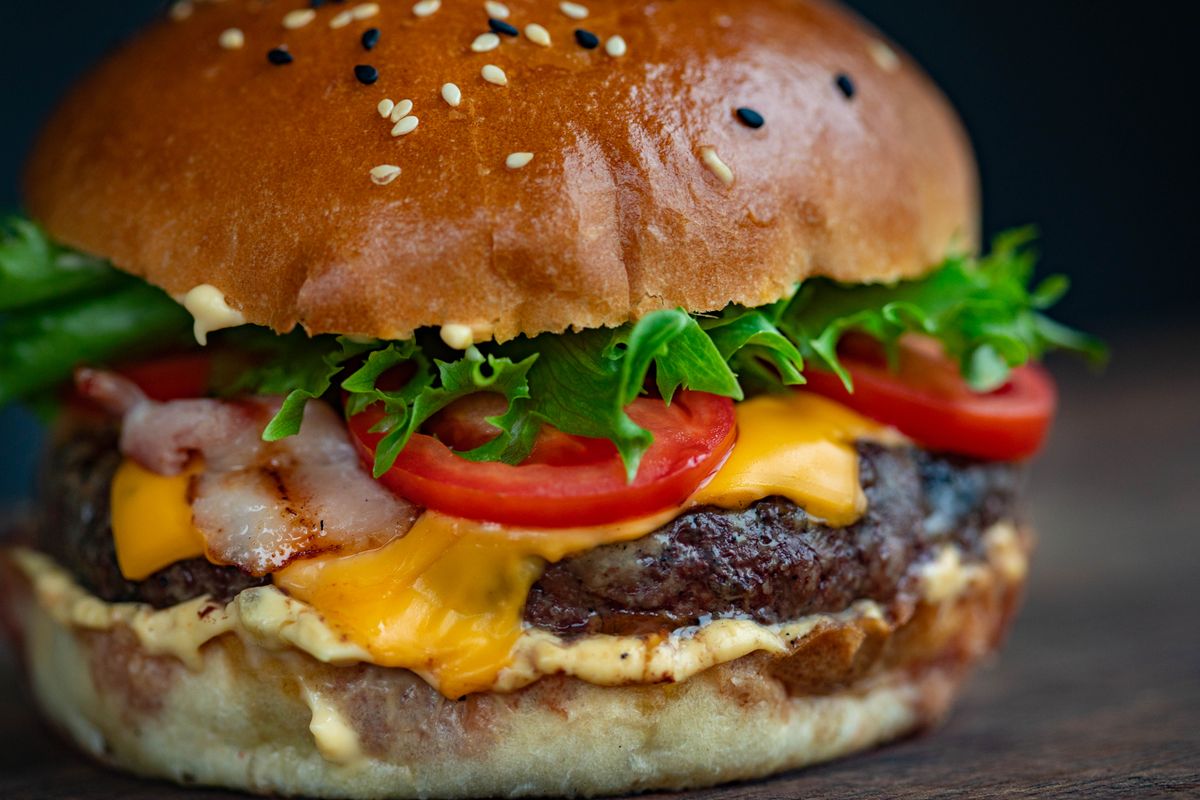
The median burger in America now costs $14.72 — blame the same cattle shortage as brisket
Ground beef is running about $6.83 a pound nationally, beef overall is up 15% since 2025, and even the Whopper got a dime added to its price tag. This isn't a burger problem — it's the same cattle math hitting every menu in the country.
Order a burger anywhere in America right now — fast food, fast-casual, sit-down, doesn't matter — and there's a decent chance the number on the receipt would have bought you two burgers a couple of years ago. As of July 2026, the median burger price in the US hit $14.72. That's not a typo, and it's not one greedy chain. It's every burger joint in the country running the exact same math on the exact same shrinking supply of cattle.
The number behind the number
Ground beef — the backbone of every burger from the drive-thru to the smash-burger spot with the line out the door — is running roughly $6.83 a pound nationally, per Bureau of Labor Statistics data. Beef prices overall are up 15% since 2025. A restaurant-grade 6-ounce 80/20 patty now costs an operator somewhere between $1.50 and $2.00 just in raw beef, before the bun, the cheese, the labor, or the rent.
Translate that into what you're actually paying: value-menu burgers still cling to the $2.50-$5 range if you can find one, standard fast-food burgers run $5-$10, and fast-casual — your Shake Shacks and Five Guys of the world — commonly land at $8-$15. Sit-down burger platters routinely clear $12-$25. The $14.72 median sits right in the thick of that fast-casual-to-sit-down territory, which tells you where the real price growth is concentrated.
- $14.72 — median US burger price, July 2026 (up 0.1% from June)
- $6.83/lb — national average price of ground beef, per BLS
- 15% — increase in beef prices since 2025
- +$0.10 — price hike on Burger King's Whopper since 2025
- +$0.80 / +$0.90 — increases on the Double Whopper Meal and Bacon King Meal
(Sources: Toast POS burger price index, US Bureau of Labor Statistics, Newsweek, Mashed)
Same herd shortage, different cut
If this sounds familiar, it should — it's the identical story driving brisket to record prices at barbecue joints nationwide. Years of drought scorched grazing land, feed costs spiked, and ranchers thinned herds instead of rebuilding them. The result is the smallest US cattle herd in decades, and ground beef doesn't get a pass just because it's the "cheap cut." Trim and ground beef come from the same shrinking supply as everything else with four legs.
The difference is visibility. Nobody notices a 10-cent Whopper increase the way they notice a $35 brisket plate. Burger price inflation is death by a thousand nickel-and-dime hikes spread across millions of transactions a day — which makes it easier for chains to absorb quietly, and easier for customers to not quite clock how much more they're paying until they add it up over a year.
Why the Whopper only went up a dime
Chains with massive purchasing volume and long-term supplier contracts — think Burger King, McDonald's, Wendy's — can smooth out commodity spikes better than the independent burger joint down the street buying beef week to week at spot prices. That's exactly why a 15% jump in beef costs shows up as a 10-cent Whopper increase at Burger King, but can mean a $2-3 jump on an independent smash burger's menu.
It also explains why combo meals are climbing faster than the single sandwich — the Double Whopper Meal and Bacon King Meal each got hit harder than the base burger, since fries and drink pricing is where chains have more room to quietly claw back margin.
How to eat a burger without funding a cattle rebuild
Skip the combo. A la carte plus a fountain drink you refill is almost always cheaper than the "value" meal now, since combos are where the real markup lives.
Blends matter more than ever. An 80/20 blend costs less than a fancier 70/30 wagyu-style patty and, cooked right, delivers 90% of the flavor. Our burger blends guide breaks down what you're actually paying extra for.
Value chains are still value chains. The $2.50-$5 tier hasn't vanished — it's just smaller and harder to find. Our burger chains comparison tracks who's still holding the line.
The bun's going to keep costing more
Analysts expect cattle herds to take two to three years to rebuild — meaning beef prices, and burger prices with them, are set to keep climbing before they level off, let alone drop. The $14.72 median isn't a ceiling. It's a waypoint.
The honest advice for the next couple of years: order the burger you actually want, stop assuming the price is a rip-off, and check our burgers guide before you assume the joint down the street with the better price is cutting corners. Sometimes they're just buying beef smarter than the next place. Sometimes they're not — and that difference is worth knowing before you order.