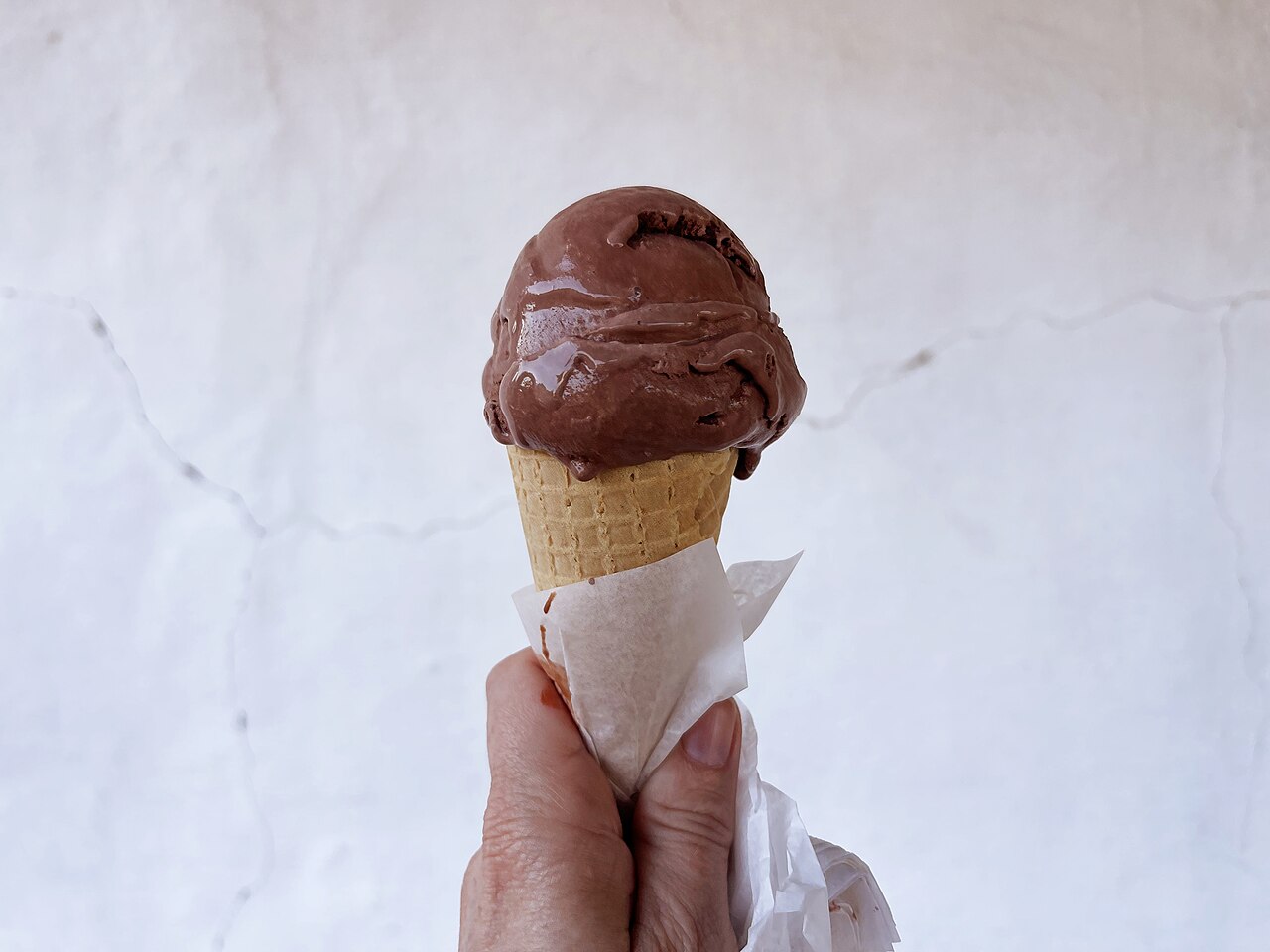
Ice cream is the one food getting cheaper this summer — thank the butterfat glut
A half-gallon slipped below $6 in June and butter is down nearly 9% on the year — a genuine grocery-aisle price drop, courtesy of America's cows making too much cream. Enjoy it before the holiday bakers show up.
Check your grocery receipt from this summer. Somewhere between the eggs that still sting and the beef that requires a payment plan, there's one line item that actually went down: the ice cream. In June, the average price of a half-gallon fell below $6 for the first time in a while, per BLS data — and no, it's not a rounding error.
In a year when "food prices" and "good news" have shared a sentence roughly never, ice cream is the exception. The reason is a glut of butterfat so large the dairy industry doesn't quite know what to do with it. You, standing in the freezer aisle, are what they're doing with it.
The one number that's melting in your favor
Butter — the purest expression of butterfat you can buy — is down nearly 9% year over year in the CPI. Ice cream is, at its core, cream, sugar, air, and cold, and cream is the expensive part. When the fat gets cheap, the half-gallon follows.
This isn't a demand collapse, either. Nobody stopped wanting ice cream — regular ice cream production hit 176.7 million gallons in the first quarter of 2026, up 1.6% from a year earlier, and a 2026 survey found that 97% of Americans like or love the stuff. The other 3% are presumably lying, lactose-intolerant, or both. Prices fell while demand grew. That almost never happens in the food business, which is exactly why it's worth understanding.
The butterfat science, minus the lab coat
Here's the plain-English version. Milk isn't one thing — it's water carrying protein and fat, and the fat is where the money is. For decades, dairy farmers have used selective breeding to nudge their herds toward richer milk: pick the cows whose milk tests higher in butterfat, breed from them, repeat. Add modern genomic testing — which can predict a calf's butterfat potential before she's ever milked — and the nudge became a shove.
The result: American cows now produce measurably fattier milk than they did ten years ago, per USDA dairy reports. Same number of cows, more cream. Stack on top of that more than $11 billion invested in new US dairy manufacturing capacity — plants built to churn, separate, and package all that fat — and you get a wholesale market swimming in butterfat with more processing muscle than it needs.
Glut plus capacity equals falling wholesale prices. Falling wholesale prices, eventually, equal a cheaper half-gallon. The commodity market did you a favor. It happens about as often as a solar eclipse, so look up.
So why is your scoop still $7?
Now walk from the freezer aisle to the cute scoop shop with the hand-lettered chalkboard. The single scoop is still $6 to $8. The artisanal pint is still $12 to $14. The butterfat in that waffle cone got cheaper — the cone didn't. What gives?
Simple: at a scoop shop, cream is a rounding error. The ingredients in your $7 scoop might cost the shop a dollar, and the dairy portion of that dollar just got a little cheaper — call it a dime of savings. The other $6 is rent on a corner location, the person behind the counter making a wage that keeps them there, insurance, the freezer's electric bill, and the brand. "Small-batch" — meaning made in small quantities, which costs more per unit, which is the point — is a labor story, not a dairy story.
None of that is a scam. It's just a different product: you're paying for a place, a person, and a recipe someone actually sweated over. But it does mean the commodity price and the chalkboard price live on different planets, and no butterfat glut is going to knock a dollar off the chalkboard.
The numbers, all in one place
- Average half-gallon of ice cream: below $6 in June 2026 — a rare grocery price decline
- Butter prices: down nearly 9% year over year (CPI)
- New US dairy manufacturing investment: $11+ billion
- Q1 2026 regular ice cream production: 176.7 million gallons, up 1.6% y/y
- Americans who like or love ice cream: 97% (2026 survey)
- Wholesale butter, rest of 2026: expected to firm to ~$1.70/lb
- The unmoved: $6-8 artisanal scoops, $12-14 pints
How to actually play this
Split your ice cream life in two. For volume — the weeknight bowl, the kids, the freezer stash — buy at the supermarket, and buy now. The store brands and the big national half-gallons are where the cheap butterfat actually lands, and quality-wise the gap between a good store brand and a premium label is smaller than the price gap suggests. If you want help sorting the freezer aisle, our ice cream guide breaks down what overrun — the amount of air whipped into the mix — actually tells you about what you're buying.
For the experience — the walk, the cone, the flavor some obsessive spent three months perfecting — go to the scoop shop and pay the $7 without grumbling. You're not buying butterfat there; you're buying an evening. Just don't buy their $13 pint expecting a deal. That's paying dinner-out prices to eat at home.
The window is already closing
One caveat before you build a chest-freezer strategy around this: the USDA expects wholesale butter to firm up to around $1.70 a pound for the rest of the year, as holiday baking season and export demand start pulling on the same pile of fat. Every stick of butter creamed into a December cookie is butterfat that isn't becoming your half-gallon, and exporters pay in dollars just like you do.
That doesn't mean prices snap back overnight — retail moves slower than wholesale in both directions, which you already know from watching it climb. But the glut that made this summer cheap is not a permanent condition. It's a sale, and sales end.
Grocery prices go up like an elevator and come down like a feather. This summer, for once, the feather landed in the freezer aisle. Grab a half-gallon before the cookie people get to the butter first.