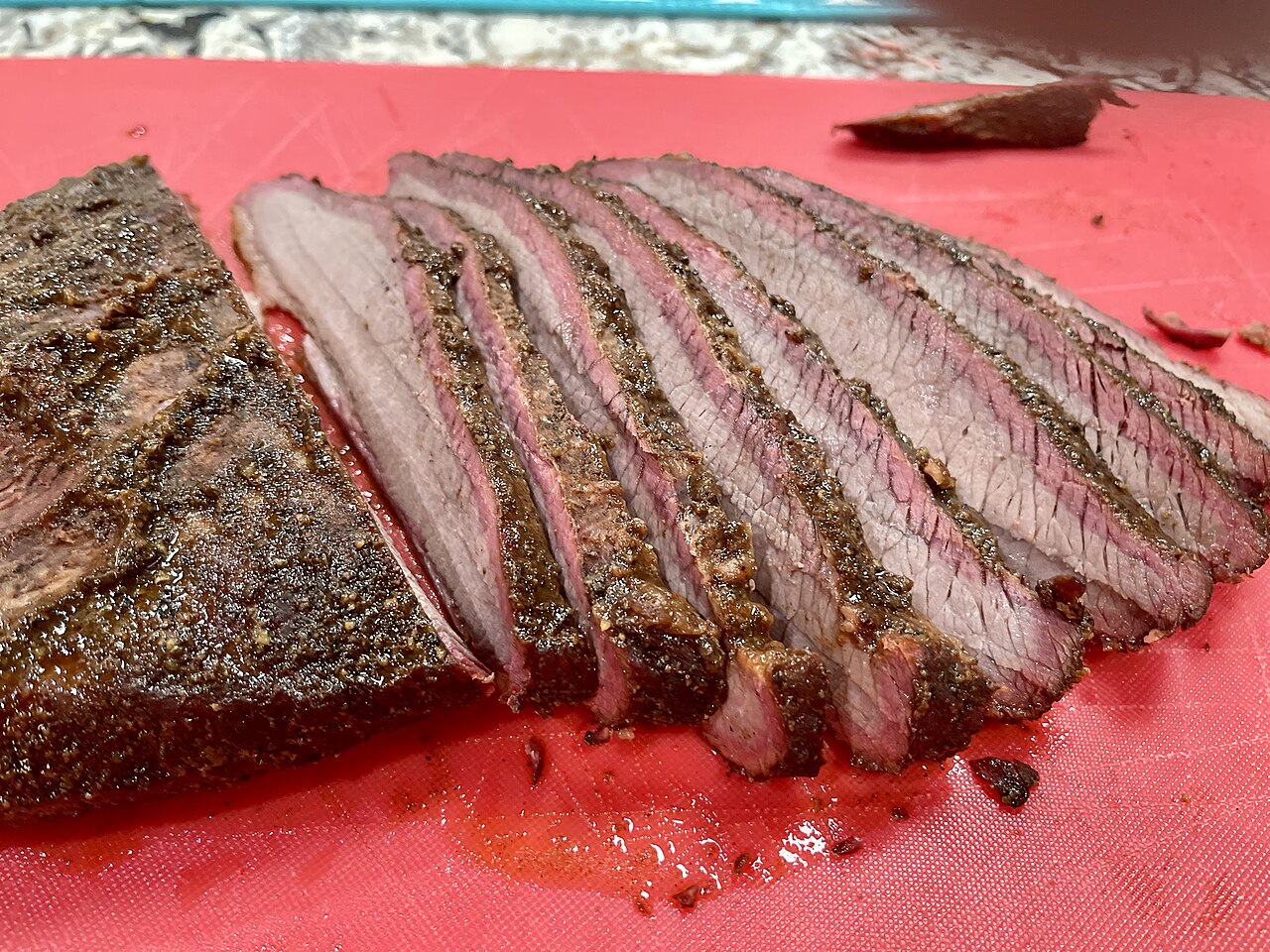
Your $35 brisket plate isn't gouging — it's the smallest cattle herd in decades
Retail beef just hit an all-time record of $8.90 a pound, brisket is up 17% in a year, and boxed beef is sitting near $412 per hundredweight. Before you blame the pitmaster, do the math with us.
You walked up to the counter, ordered a half pound of fatty brisket, and the register said a number that made you check whether you'd accidentally ordered wagyu. You didn't. You ordered regular brisket in August 2026 — and the guy behind the counter is making less on it than he did two years ago.
Here's the thing nobody at the smokehouse wants to explain while a line snakes out the door: beef prices aren't just high right now. They are the highest they have ever been, full stop, and every pound of brisket in that pit is a small act of financial bravery.
The record nobody wanted to set
Start with the numbers, because they're brutal. USDA data puts all-fresh retail beef at $8.90 a pound in July — an all-time record. Ground beef, the stuff of weeknight tacos and dollar-menu dignity, is running about $7 a pound. Also a record.
Brisket — the cut that built Texas barbecue and half of your Instagram feed — is retailing at $7.53 a pound, up 17% from a year ago. And in late August, Choice boxed beef (the wholesale price packers charge, quoted per hundredweight — that's per 100 pounds) hit roughly $412/cwt. Outside of two freak weeks during the pandemic supply meltdown, that's the highest wholesale beef price in history. Except this time there's no meltdown. This is just the market now.
The Dallas Observer — a paper that takes brisket about as seriously as journalism gets — called rising beef prices "an existential crisis in the BBQ industry." That's not a food writer being dramatic. That's the correct read.
Why beef costs this much (hint: it's not greed)
The short version: America is running out of cattle. Years of drought scorched grazing land across the Plains, feed costs went vertical, and ranchers responded the only way the math allowed — by selling off animals instead of raising them. The result is the smallest US cattle herd in decades.
The pipeline numbers are grim. August feedlot inventory came in at 10.92 million head — the smallest since October 2017, and down eight straight months. USDA forecasts total beef supply falling to 31.1 billion pounds, the lowest since 2019. Fewer cattle going in means less beef coming out, for years. You can't speed-run a cow. From the moment a rancher decides to rebuild a herd to the moment that decision shows up as a brisket in a smoker, you're looking at two to three years — which is exactly how long analysts expect prices to stay high, and then get higher.
- $8.90/lb — all-fresh retail beef in July, an all-time record
- ~$7/lb — ground beef, also a record
- $7.53/lb — retail brisket, up 17% year over year
- ~$412/cwt — Choice boxed beef in late August, a record outside two pandemic-disruption weeks
- 10.92 million head — August feedlot inventory, smallest since October 2017, down 8 straight months
- 31.1 billion lbs — USDA's forecast for total beef supply, lowest since 2019
(Sources: USDA AMS late-August reports, USDA supply forecasts, Dallas Observer, Newsweek/Bloomberg coverage)
Do the brisket math before you blame the pitmaster
Let's do what the register receipt won't: the actual arithmetic. A whole packer brisket runs 12 to 14 pounds raw. At current wholesale and retail levels, a smokehouse is paying somewhere in the range of $5 to $7.50 a pound just to get it in the door — call it $70 to $100 per brisket before anyone lights a fire.
Then the cruel part: brisket loses 40 to 50% of its weight in the smoker. Trim, rendered fat, twelve hours of moisture drifting out of the stack as delicious-smelling money. Your 13-pound brisket comes out as maybe 7 pounds of sliceable meat. Suddenly the raw cost per finished pound is $10 to $15 — before wood, before rent, before the human being who showed up at 10 p.m. to babysit a fire all night.
So when the menu says $35 a pound, the smokehouse isn't gouging you. It's surviving on a margin thinner than the bark. If you want the full breakdown — cut by cut, with historical price charts — we keep it updated in our brisket price guide.
What smokehouses are actually doing about it
Walk into any serious barbecue joint right now and you can see the survival strategies on the menu board. Portions are shrinking — the quarter-pound minimum is the new half-pound. Pork and turkey are getting star billing, because pork butt and turkey breast didn't just set all-time price records. And sausage — house-made, using trim that would otherwise be a write-off — has quietly become the best value in American barbecue.
Some places are leaning into the styles that were never brisket-first to begin with. Carolina whole hog, Memphis ribs, that whole beautiful map of regional smoke — our guide to American BBQ styles covers it — suddenly looks less like tradition and more like a hedging strategy.
What almost nobody is doing: cutting quality. Pitmasters would rather charge you honestly for good brisket than quietly serve you bad brisket at the old price. That deserves your respect — and your dollars.
How to order like you understand the moment
You can still eat great barbecue in 2026 without taking out a loan. A few moves:
Go early. The best joints still sell out, and showing up at 11 a.m. beats showing up at 1 p.m. to a chalkboard that says "SOLD OUT" over everything you wanted.
Split the fatty point. A half pound of moist brisket shared between two people, plus sausage and sides, eats better than a solo pound of lean — and costs less.
Respect the two-meat plate. Brisket plus sausage or turkey is the value play. The three-meat flex can wait until the herd rebuilds.
And if you're new to all this, start with our complete barbecue guide before you get in line.
The next two years, in one sentence
Prices stay high, then go higher, until roughly 2028 — because that's how long biology takes, and no amount of yelling at the counter changes gestation periods.
So here's the deal: the pitmaster didn't raise the price of beef. The drought did, the feed bill did, ten million missing cattle did. The person slicing your brisket is just the last one standing between you and the math — and honestly, they're taking the hit better than the rest of us. Tip accordingly.