7 Brew paid $143 million for 73 dead salad drive-thrus — the coffee war is now a real-estate war
In a bankruptcy auction this week, the Arkansas drive-thru coffee chain outbid Dutch Bros for the leases Salad and Go left behind in Arizona, Texas, Nevada and Oklahoma. Nobody bought a salad recipe. They bought the lanes.
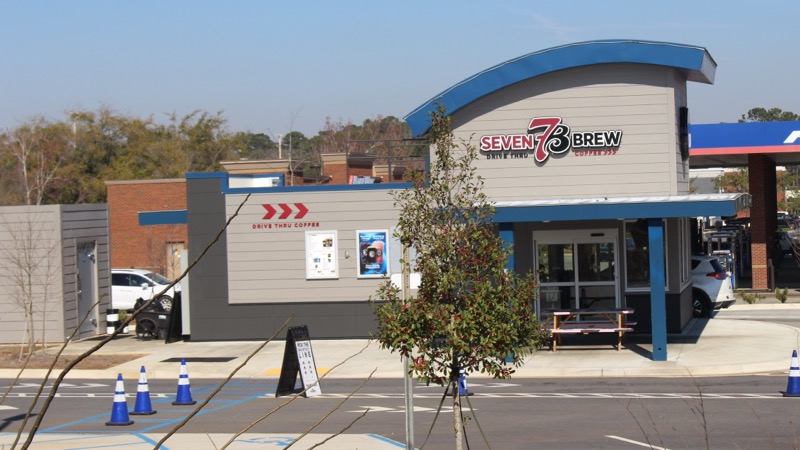
Two weeks ago that little building on the corner sold you a $6 salad through a window. It closed, along with every other Salad and Go in the country, when the chain went into Chapter 11 in August. On Monday, in a courtroom rather than a kitchen, two coffee companies fought over the empty shell. The winner will paint it a different colour and hand you a $6 iced latte through the same window, probably before the salad signage has fully faded off the awning.
7 Brew, the drive-thru coffee chain out of Rogers, Arkansas, won the auction with a bid of $143.2 million for 73 former Salad and Go sites. Dutch Bros, which had walked in as the presumptive buyer with a $105 million deal for up to 65 locations, declined to raise its number and settled for backup-bidder status. A bankruptcy judge in Arizona will consider the lease transfers on September 21; landlords have until September 17 to object, and some of them will.
What $143 million actually buys
Not restaurants. Leases. The package covers 41 sites in Arizona, 20 in Texas and six each in Nevada and Oklahoma, plus security deposits, customer lists and whatever else was bolted to the walls. The bid was structured in two tiers: roughly $125 million for 49 of the best sites, which works out to about $2.5 million each, and $18 million for the remaining 24, about $750,000 apiece.
Read those per-unit numbers again, because they are the whole story. Salad and Go's lease portfolio started at around 140 locations. The sale covers half. The other half, the ones nobody bid $750,000 for, are the ones where the salad math failed for a reason that has nothing to do with lettuce: wrong corner, wrong traffic count, wrong side of the street for the morning commute. Coffee chains know exactly which side of the street the morning commute is on. It is the only side they care about.
Why a coffee chain wants a salad building
Because a Salad and Go is a drive-thru coffee stand that happens to have a walk-in full of romaine. The concept was built on the same bones 7 Brew and Dutch Bros use: a small footprint, a tight kitchen, a double lane, a window, a lot for cars to queue on, and a spot on a commuter artery where the morning turn-in is easy. Salad and Go even sold breakfast burritos and coffee, which tells you it had already figured out the building was more valuable at 7 a.m. than at noon.
Building that from dirt in a Phoenix suburb means buying or ground-leasing the pad, 12 to 18 months of entitlements and permits, utility hookups, and a construction bill that runs well into seven figures before a single espresso shot is pulled. Buying the lease out of bankruptcy court skips most of that. You get a lot that already has curb cuts, a drive-thru lane the city already approved, a grease trap, a hood, and neighbours who are used to cars idling there. The value of $2.5 million a site is not the building. It is the eighteen months you did not spend waiting for a planning commission.
• Winning bid: $143.2 million from 7 Brew for 73 former Salad and Go sites
• Structure: about $125 million for 49 sites (~$2.5M each) and $18 million for 24 sites (~$750K each)
• Where: 41 Arizona, 20 Texas, 6 Nevada, 6 Oklahoma
• Losing bid: Dutch Bros, $105 million for up to 65 sites, declined to go higher, now backup bidder
• Salad and Go: filed Chapter 11 in August 2026, roughly 140 leases, every store closed
• 7 Brew: opened its 777th stand in June, on pace to pass 1,000 this year, 400-plus franchised openings projected for 2026
• Dutch Bros: about 1,200 shops; Q2 revenue $550.9M, up 32.5%; company same-shop sales up 8.3%
• Court: objections due September 17, hearing September 21
• US branded coffee shop market: $58.5 billion, 45,227 outlets, 588 brands
(Sources: bankruptcy court filings; Restaurant Dive, Nation's Restaurant News, Axios Phoenix; Dutch Bros Q2 2026 results; World Coffee Portal)
The race that used to be polite
Dutch Bros is the incumbent of drive-thru coffee: about 1,200 shops, revenue up 32.5% to $550.9 million last quarter, same-shop sales up 8.3% at company stores, 48 new shops in three months. It is publicly traded, well capitalised and growing at a pace most restaurant companies would frame and hang on the wall. 7 Brew is the upstart: 777 stands as of June, more than 400 franchised openings projected this year, and a stated plan to pass 1,000 before December. If the leases transfer, 7 Brew's count lands within shouting distance of the leader it did not exist alongside five years ago.
Dutch Bros CEO Christine Barone's explanation for walking away was that the company has "always been disciplined in how we allocate capital." That is what you say when the other guy paid more than you thought the thing was worth. It may also be true. Paying $2.5 million for a lease in a market where you already have shops is one thing; paying it for a lease where the previous tenant just went broke is a bet that the location, not the concept, is what failed. 7 Brew is making that bet 73 times at once, in Dutch Bros' home turf of the Southwest, using franchisees' money to build out what it just bought.
What it means for your cup
First, the obvious: if you live in metro Phoenix, Dallas-Fort Worth, Las Vegas or Oklahoma City, a lot of corners that sold salads are about to sell 7 Brew's sweetened espresso drinks, energy-drink "infusions" and shaken iced coffees. Expect the openings to come fast; the whole point of buying a built lane is not to wait.
Second, the less obvious: more lanes do not mean cheaper coffee. The national average price of an iced coffee rose nearly 5% last year and green coffee is still near record cost, helped along by a 50% tariff on Brazilian beans. Drive-thru chains compete on speed, sugar and loyalty apps, not on price. A 24-ounce flavoured iced latte will cost you $6 to $7 at either window, and both companies will tell you that is a bargain against Starbucks. Compare it to what the same drink costs at home and it is a $1,500-a-year habit at one a day.
Third, watch the landlords. A Salad and Go lease was priced for a salad chain. A coffee chain that generates $2 million a year through a window can afford more rent, and the landlords who object by September 17 will be the ones who have figured that out. Some sites will fall out of the deal. The ones that survive will tell you exactly which corners in your city are worth fighting over at 7 a.m.
Salad and Go spent a decade proving you could sell a $6 salad through a window. 7 Brew just paid $143 million to prove the window was the only part that was worth anything.