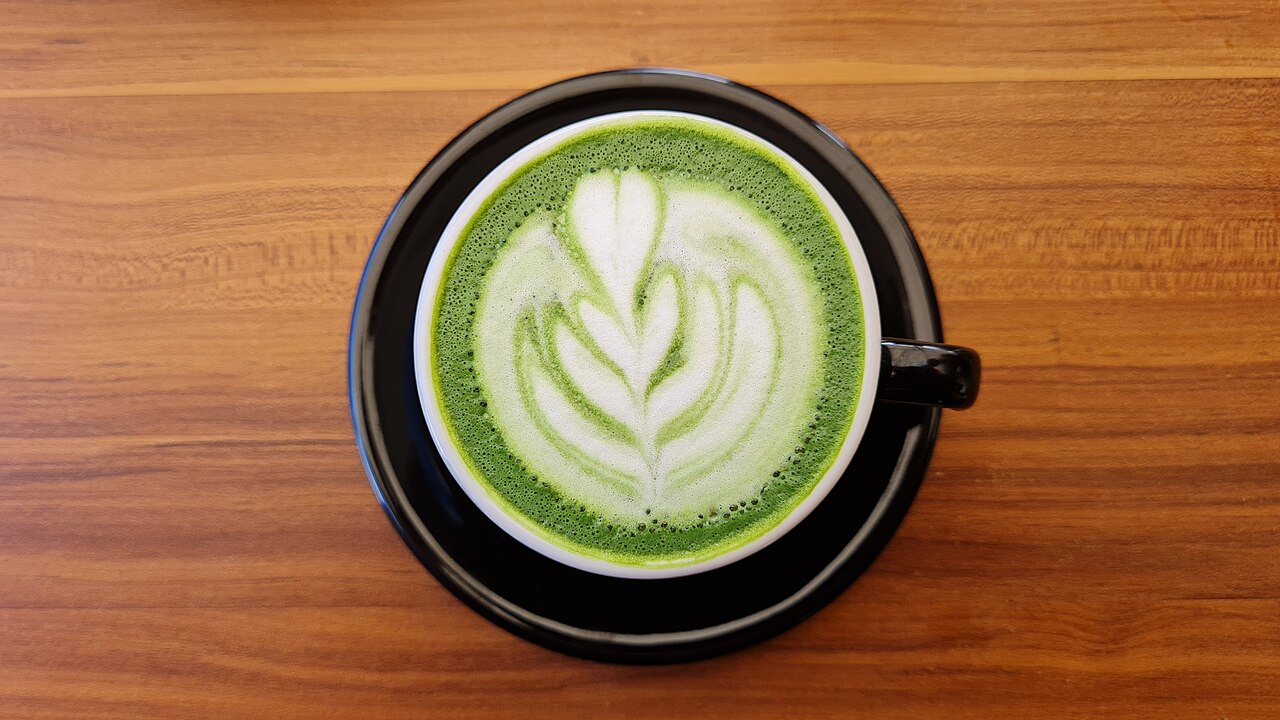
Coffee futures just fell 30% — here's why your $7 latte didn't get the memo
Arabica is trading around $3.10 a pound after Brazil hauled in a record 75-million-bag crop — down roughly 30% from the $4.41 panic peak of early 2025. Your café latte, meanwhile, hasn't budged a nickel. Here's the honest math on why.
You've probably seen the headline by now: coffee prices are falling. Maybe a cousin texted it to you with a little celebration emoji. And then you walked into your local shop, ordered the usual, and paid the exact same $7 you paid in February — when arabica was trading almost a dollar and a half higher per pound.
Nobody's ripping you off, exactly. But nobody's rushing to give the money back, either. Let's walk through what actually happened, what it means for your wallet, and where — if anywhere — you'll actually feel this.
Brazil grew a mountain of coffee, and the market blinked
The short version: Brazil, the world's largest coffee producer by a mile, is wrapping up a record harvest of roughly 75 million bags — that's 60-kilogram bags, the industry's standard unit, about 132 pounds each. More than 90% of the crop is already in, helped along by dry weather that let farmers pick fast and clean.
Traders saw that mountain coming and did what traders do. Arabica futures on the ICE exchange slid to around $3.10 a pound in late August — a long fall from the historic $4.41 peak in February 2025, when climate shocks in Brazil and Vietnam collided with the tightest inventories in years and the market briefly lost its mind.
That's a drop of roughly 30% from the top. In commodity land, that's an earthquake. In your café? Crickets.
The rollercoaster you already paid for
To understand why your latte is frozen at $7, you have to remember the ride that got us here. Through 2024 and into 2025, drought and heat hammered Brazil's arabica and Vietnam's robusta at the same time — the coffee equivalent of both your parents getting sick at once. Prices went vertical.
Then Washington piled on. US tariffs on Brazilian coffee cut American imports from Brazil by 46% in a single month — importers simply rerouted or sat on their hands — before the tariffs were removed in late November 2025. For a country that drinks more coffee than any other on Earth, that was a self-inflicted supply squeeze layered on top of a natural one.
Here's the part that matters for the current moment: through all of that, most cafés did not pass the full spike on to you. A shop that held its latte at $7 while green coffee doubled was quietly eating the difference — thinner margins, smaller pours of profit. Now that raw coffee is cheap again, they're un-eating it. That's not gouging. That's a business exhaling.
Your latte is mostly not coffee — and never was
Time to decode the drink. "Green coffee" — the raw, unroasted beans that futures contracts actually price — makes up somewhere around 10 to 15% of the cost of a café latte. The rest of your $7 is labor, rent, milk, cups, insurance, equipment, and the margin that keeps the lights on.
Run the math. If beans are $1 of your $7 drink and the bean market falls 30%, the "honest" price cut is about 30 cents. No shop is reprinting menus over 30 cents — especially when the barista's wages went up, the lease renewal came in hot, and milk didn't get the memo about anything falling.
There's a second layer: roasters hedge. The coffee in today's hopper was probably bought on contract three to nine months ago — at higher prices. Cheap August futures become cheap physical coffee sometime around winter, and cheap wholesale roasted coffee a while after that. Paying $24 for a bag roasted from beans locked in last spring is buying last spring's market, whether you like it or not.
The latte asymmetry, by the numbers:
- Arabica futures, late August 2026: ~$3.10/lb — down ~30% from the February 2025 record of $4.41/lb
- Brazil's 2026 harvest: a record ~75 million bags, over 90% already picked
- US imports from Brazil fell 46% in one month under 2025 tariffs, lifted late November 2025
- Green coffee's share of a café latte's cost: roughly 10-15% — labor, rent, and milk carry the rest
(Sources: ICE arabica futures and trading data, Reuters and industry coverage, BLS coffee CPI)
Menu prices are a one-way ratchet
Economists call it "sticky downward," which is a polite way of saying prices climb the stairs and take the elevator never. Once a café reprints the menu at $7, that number is load-bearing. Customers absorbed it, the spreadsheet absorbed it, and cutting it signals weakness more than generosity.
And to be fair to the shops: most of what pushed lattes toward $7 wasn't beans in the first place. It was wages, rent, and dairy — none of which are having a record Brazilian harvest. If your neighborhood third-wave shop pulling carefully sourced single-origin shots didn't jack prices during the $4.41 chaos, it doesn't have much room to cut them now.
Where you'll actually feel the drop
The relief is real — it's just entering the building through a different door. Watch the grocery aisle first. Bagged beans and ground coffee track the commodity far more closely than café menus do, because beans are most of the product and supermarket pricing is a knife fight. When the big roasters start announcing price moves — and they will, loudly, because it's good PR — the 12-ounce bag is where it lands.
That makes this a genuinely good moment to shift a few of your weekly drinks to your own kitchen. The gap between a $7 latte and a home-brewed one was already brutal; it's about to get wider. We ran the full cost-per-cup breakdown in our latte vs. home brewing guide, and the short version is: the machine pays for itself embarrassingly fast.
Three things to watch this fall: roaster price announcements, the shelf price on your usual grocery bag, and — the long shot — any café bold enough to advertise a price cut. That last one would be news. We'll cover it.
The bottom line
Commodity markets forgive and forget in months. Menus have the memory of an elephant with a grudge. Brazil's record crop will make your kitchen counter cheaper by Christmas — but the $7 latte isn't a coffee price. It's a rent price, a wage price, and a milk price wearing a coffee costume. The beans were never really the point.